
Editorial Note: This article examines the clinical and peer-reviewed research record behind NeoLife Carotenoid Complex. All cited studies are published in indexed scientific journals. No unverified health claims are made. Statements about immune function and antioxidant activity have not been evaluated by the Food and Drug Administration. This product is not intended to diagnose, treat, cure, or prevent any disease.
The Research Gap That Created Carotenoid Complex
In the early 1990s, epidemiological data from the USDA’s NHANES surveys presented a consistent picture: populations consuming the highest amounts of carotenoid-rich fruits and vegetables showed markedly better health outcomes across multiple indicators. The scientific community’s initial response was to isolate the most studied carotenoid — beta-carotene — and synthesize it as a standalone supplement.
NeoLife’s Scientific Advisory Board (SAB) took a different position. The research reviewed by the SAB pointed not to beta-carotene alone, but to the full spectrum of carotenoids present in whole foods. The hypothesis was that the synergistic activity of multiple carotenoids — including alpha-carotene, lycopene, lutein, and zeaxanthin — was responsible for the health associations observed in dietary studies, not any single compound in isolation.
This distinction drove the formulation of Carotenoid Complex: a broad-spectrum supplement derived entirely from whole-food sources, designed to deliver the carotenoid diversity found in a diet rich in colorful fruits and vegetables. The scientific validity of that decision has since been tested in multiple independent research settings.
| Research Milestone | Institution / Journal | Key Finding | Year |
|---|---|---|---|
| Plasma bioavailability study | American Journal of Clinical Nutrition | First study confirming serum uptake of multiple carotenoids from a whole-food supplement | 1994 |
| USDA immune function trial | USDA / peer-reviewed journals | Immune capacity increased 37% in 20 days; NK cell and lymphocyte activity enhanced | 1990s |
| Lipid peroxidation study | Journal of the American College of Nutrition | Placebo-controlled, double-blind: MDA-TBA levels normalized with supplementation | 1990s |
| Comparative immunomodulatory study | Nigerian Journal of Physiological Sciences | GNLD complex outperformed carrot carotenoids in lymphocyte, monocyte, and platelet response | 2000s |
| LDL oxidation protection | USDA-affiliated research program | Documented reduction in oxidation of LDL cholesterol molecules | 1990s |
The 1994 Bioavailability Study: A First in Supplement Science
The foundational peer-reviewed study on Carotenoid Complex was published in the American Journal of Clinical Nutrition in April 1994 (Carughi & Hooper, PMID: 8147336). The study is notable for two reasons: its publication venue and its specific findings.
The American Journal of Clinical Nutrition is one of the most cited journals in nutritional science, published by the American Society for Nutrition. Appearing in this journal means the research passed the peer-review standards applied to mainstream clinical nutrition science — not supplement industry publications.
Study Design and Protocol
Eleven adults were enrolled in a controlled supplementation protocol. The study used a depletion-repletion design: participants first consumed a low-carotenoid diet for two weeks, allowing baseline plasma carotenoid concentrations to fall to approximately 60% of normal values. This depletion phase established a measurable starting point from which supplementation effects could be quantified.
Participants then supplemented their low-carotenoid diet daily with the Carotenoid Complex for four weeks. Plasma carotenoid concentrations were measured by HPLC — high-performance liquid chromatography — allowing precise quantification of individual carotenoids in the bloodstream. Serum cholesterol, triglycerides, and lipoproteins were also monitored throughout.
What the Data Showed
Within one week of supplementation, alpha- and beta-carotene concentrations returned to baseline levels. By the end of the four-week supplementation period, both had risen significantly above pre-depletion baseline values (p < 0.05). Serum lipids did not change significantly, which the researchers noted as a relevant safety observation.
“This is the first study reporting increments of serum carotenoids, other than beta-carotene, after supplementation.” — Carughi & Hooper, American Journal of Clinical Nutrition, 1994
That final sentence in the abstract carries significant weight. At the time of publication, the supplement industry had focused almost entirely on beta-carotene as the relevant carotenoid marker. This study was the first to demonstrate that a mixed carotenoid supplement could measurably elevate multiple carotenoid fractions in human blood — establishing the bioavailability premise that subsequent immune function research would build upon.
The USDA Research Program: Immunity and Oxidative Protection
Following the bioavailability confirmation, USDA researchers conducted a series of clinical studies examining the functional effects of Carotenoid Complex on immune markers and oxidative stress. These studies were conducted under the USDA’s human nutrition research program and published in peer-reviewed outlets, including the Annals of the New York Academy of Sciences, American Journal of Clinical Nutrition, and Free Radical Biology and Medicine.
Immune Function: The 37% Finding
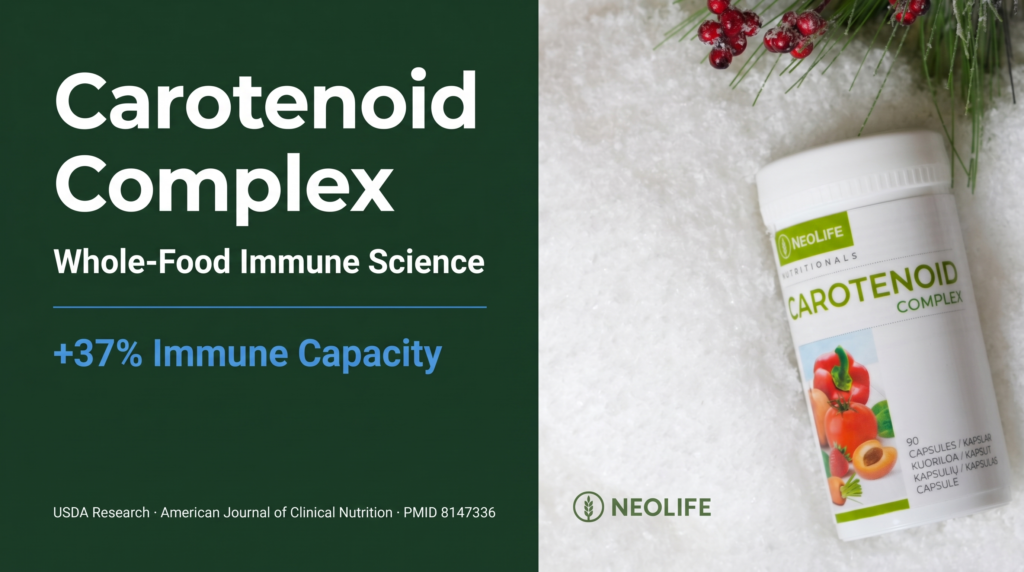
The most frequently cited outcome from the USDA program is the documented increase in immune capacity measured over a 20-day supplementation period. In the study, women supplementing with Carotenoid Complex showed a measurable increase in two key immune markers: natural killer (NK) cell activity and lymphocyte proliferation.
Natural killer cells are a component of the innate immune system — they respond to infected or abnormal cells without requiring prior sensitization. Lymphocytes are white blood cells central to adaptive immune responses. The combined enhancement of both cell types, measured at approximately 37% above the values recorded during the carotenoid depletion period, indicated a systemic immune response rather than an isolated effect on a single marker.
Critically, the research also compared the broad-spectrum Carotenoid Complex against beta-carotene supplementation alone. The mixed carotenoid formula produced greater immune benefits than beta-carotene in isolation — a finding consistent with the SAB’s original hypothesis that whole-food carotenoid diversity, not single-compound supplementation, was the relevant variable.
LDL Oxidation Protection
A separate arm of the USDA research program examined the antioxidant effects of Carotenoid Complex on blood lipid structure. The research documented a measurable reduction in the oxidation of LDL cholesterol molecules following supplementation. LDL oxidation is considered a relevant marker in cardiovascular research because oxidized LDL is more likely to participate in arterial wall processes than non-oxidized LDL.
The mechanism proposed by researchers is consistent with the lipid-soluble nature of carotenoids: these compounds integrate into blood lipid structures where they can act as chain-breaking antioxidants, neutralizing free radicals before they initiate lipid peroxidation cascades.
The Placebo-Controlled Double-Blind Study: MDA-TBA as a Marker
One of the most methodologically rigorous studies in the Carotenoid Complex research record is the placebo-controlled, double-blind trial examining malondialdehyde-thiobarbituric acid (MDA-TBA) concentrations in women. This study was published in the Journal of the American College of Nutrition.
MDA-TBA is a recognized biomarker of lipid peroxidation — the oxidative degradation of lipids in cell membranes and blood. Elevated MDA-TBA concentrations indicate that oxidative stress is causing measurable damage to lipid structures. The study followed a design similar to the bioavailability study: participants were placed on a low-carotenoid diet until MDA-TBA levels rose, then randomized to receive either Carotenoid Complex or placebo.
The placebo-controlled, double-blind methodology is the standard for pharmaceutical clinical trials and is relatively rare in dietary supplement research. Its use in this context means neither participants nor researchers knew who was receiving active supplementation during the measurement period — removing observer and expectation bias from the results.
The findings showed that women in the supplementation group experienced normalization of MDA-TBA concentrations, while those in the placebo group remained elevated. The interpretation offered by the researchers was that the carotenoid supplementation provided sufficient antioxidant activity to protect against the lipid peroxidation induced by the low-carotenoid diet.
Comparative Research: Whole-Food Complex vs. Single-Source Carotenoids
An animal study published in the Nigerian Journal of Physiological Sciences compared the immunomodulatory effects of NeoLife’s Carotenoid Complex against carrot-extracted carotenoids in Wistar rats. The study measured changes in lymphocytes, monocytes, and platelet counts — standard immune markers — in both groups.
Both supplements increased immune parameters relative to controls. The GNLD Carotenoid Complex group, however, showed significantly greater increases across all three measured markers compared to the carrot carotenoid group. The researchers attributed this difference to the broader carotenoid profile of the NeoLife formulation: while carrot extract is predominantly beta-carotene and alpha-carotene, Carotenoid Complex includes lycopene, lutein, zeaxanthin, and additional carotenoids from tomato, spinach, bell pepper, strawberry, apricot, and peach sources.
This comparative finding supports the whole-food diversity principle that guided the original formulation — and distinguishes Carotenoid Complex from supplements that deliver carotenoids from a single botanical source.
What Is Actually in Carotenoid Complex
Understanding the research requires understanding the formulation. Carotenoid Complex is not a beta-carotene supplement with added ingredients. It is a multi-source carotenoid blend in which no single carotenoid dominates the profile.
Each serving of three softgels provides:
| Nutrient / Component | Amount Per Serving | Source |
|---|---|---|
| Vitamin A (as beta and alpha-carotene) | 2250 mcg (250% DV) | Whole-food carotenoid blend |
| Vitamin E (as d-alpha-tocopherol) | 12 mg (80% DV) | Natural source |
| Lycopene | 1200 mcg | Tomato oleoresin |
| Lutein / Zeaxanthin | 410 mcg | Marigold extract (Tagetes erecta) |
| Carotenoid Complex Blend | 900 mg total | Red bell pepper, carrot, strawberry, apricot, peach, tomato, spinach, marigold |
The oil-based softgel delivery format is intentional. Carotenoids are lipid-soluble compounds — they require the presence of dietary fat for absorption. Delivering them in an olive oil base ensures the fat-solubility requirement is met within the capsule itself, independent of meal composition. Every batch is tested for purity and potency before release.
Each three-capsule serving is formulated to provide the carotenoid equivalent of one serving of carotenoid-rich fruits and vegetables — a meaningful benchmark given that CDC data consistently shows the majority of adults in developed countries fall short of even the five-serving daily recommendation.
Where Carotenoid Complex Fits in NeoLife’s Nutritional System
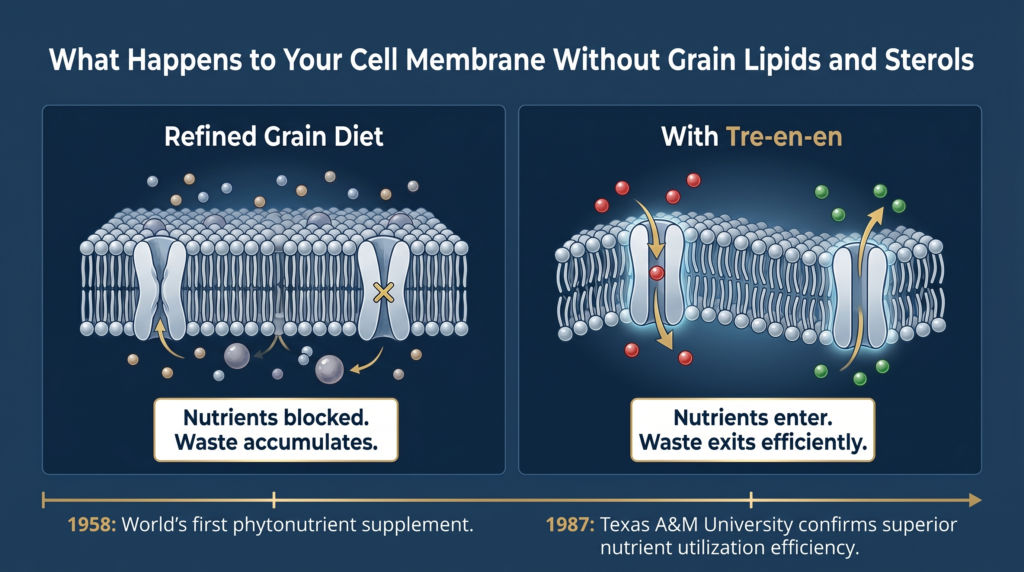
Carotenoid Complex is one of four components in NeoLife’s Pro Vitality+ foundational system — alongside Tre-en-en Grain Concentrates, Omega-3 Salmon Oil Plus, and an Essential Vitamin and Mineral Complex. Understanding its role within that system clarifies why the SAB positioned carotenoids as foundational rather than optional.
The cellular nutrition philosophy underlying Pro Vitality+ holds that modern diets create predictable gaps at the cellular level — in grain-derived lipids, phytonutrient diversity, omega-3 fatty acids, and essential micronutrients. Carotenoid Complex addresses the phytonutrient gap specifically, providing the broad-spectrum carotenoid intake that dietary surveys indicate most people do not achieve through food alone.
In this context, the immune and antioxidant research findings are not isolated product claims. They represent documentation of what happens when a specific and measurable nutritional gap — carotenoid insufficiency — is addressed with a standardized, bioavailable, whole-food-derived supplement.
How This Research Compares to Industry Standards
The dietary supplement industry is not required by regulation to conduct clinical trials demonstrating efficacy before bringing products to market. Most supplements are marketed based on ingredient plausibility, in-vitro studies, or animal data. Human clinical trials — particularly placebo-controlled, double-blind designs — are the exception rather than the norm.
Against this backdrop, the Carotenoid Complex research record is genuinely unusual. The publications span multiple peer-reviewed journals — American Journal of Clinical Nutrition, Journal of the American College of Nutrition, Annals of the New York Academy of Sciences, Free Radical Biology and Medicine — each independently reviewed and indexed. The research program includes both bioavailability confirmation and functional outcome data, covering the two questions that matter most in supplement science: does it get into the body, and does it do anything once it does?
The answer to both questions, based on the published record, is yes.
Practical Considerations
For anyone evaluating Carotenoid Complex as part of a nutritional approach, several practical points follow directly from the research:
Timing with meals: Because carotenoids are lipid-soluble, absorption is enhanced when taken with a meal containing some dietary fat. The oil-based softgel format provides a built-in fat source, but concurrent food intake further supports absorption kinetics documented in the bioavailability literature.
Consistency over time: The immune function research measured outcomes over 20-day supplementation periods following a depletion phase. In real-world conditions without the artificial depletion protocol, measurable changes in immune markers would be expected to develop over a comparable or longer timeframe. Consistent daily supplementation is the relevant variable, not acute dosing.
As part of a broader nutritional system: The research on Carotenoid Complex does not position it as a standalone intervention. The SAB’s framework treats carotenoid supplementation as one component of a system designed to address multiple nutrient gaps simultaneously. The Pro Vitality+ system represents the SAB’s integrated approach to foundational nutrition.
Quality verification: Every batch of Carotenoid Complex is tested for purity and potency. This batch-level quality control is consistent with the SAB’s stated standards of Purity, Potency, and Proof — the three criteria applied across NeoLife’s product development process.
Frequently Asked Questions
What makes NeoLife Carotenoid Complex different from a standard beta-carotene supplement?
Standard beta-carotene supplements deliver a single isolated carotenoid, typically synthesized rather than derived from whole foods. NeoLife Carotenoid Complex provides at least 15 different carotenoids from eight whole-food sources including tomato, carrot, spinach, red bell pepper, strawberry, apricot, peach, and marigold. USDA-partnered research demonstrated that the broad-spectrum formula produced greater immune benefits than beta-carotene supplementation alone — which is why the NeoLife SAB rejected the single-compound approach when formulating the product.
Is there peer-reviewed research supporting NeoLife Carotenoid Complex?
Yes. The research record includes publications in the American Journal of Clinical Nutrition (PMID: 8147336), Journal of the American College of Nutrition, Annals of the New York Academy of Sciences, and Free Radical Biology and Medicine. Studies include a placebo-controlled double-blind trial on lipid peroxidation markers and USDA-partnered clinical research on immune function. This level of peer-reviewed documentation is uncommon in the dietary supplement category.
What did the USDA research find about Carotenoid Complex and immune function?
USDA-affiliated researchers documented an approximately 37% increase in immune capacity over a 20-day supplementation period. Specifically, the research measured enhanced activity in natural killer (NK) cells and lymphocytes — two components of the immune system that respond to cellular threats. The research also compared the whole-food carotenoid complex against beta-carotene alone, finding that the broad-spectrum formula produced superior immune outcomes.
Why are Carotenoid Complex supplements delivered in softgels with oil?
Carotenoids are lipid-soluble nutrients — they require dietary fat for absorption in the digestive tract. Delivering them in an olive oil-based softgel ensures the fat-solubility requirement is met within the capsule itself. The 1994 bioavailability study in the American Journal of Clinical Nutrition confirmed that this delivery format results in measurable increases in plasma carotenoid concentrations, with alpha- and beta-carotene returning to baseline within one week and exceeding baseline levels by the end of the four-week supplementation period.
How does Carotenoid Complex relate to NeoLife Pro Vitality+?
Carotenoid Complex is one of four components in the Pro Vitality+ foundational system, alongside Tre-en-en Grain Concentrates, Omega-3 Salmon Oil Plus, and an Essential Vitamin and Mineral Complex. The SAB designed Pro Vitality+ to address four specific nutritional gaps identified at the cellular level: grain lipid and sterol deficiency, carotenoid insufficiency, omega-3 deficiency, and micronutrient shortfalls. Carotenoid Complex is available both as a standalone product and as part of the Pro Vitality+ daily packet.
Who conducted the clinical research on NeoLife Carotenoid Complex?
The foundational bioavailability study was authored by researchers affiliated with the Neo-Life Company of America (Carughi and Hooper, 1994). Subsequent immune function and oxidative stress research was conducted by USDA researchers as part of the agency’s human nutrition research program. An independent comparative immunomodulatory study was also conducted by researchers and published in the Nigerian Journal of Physiological Sciences. The involvement of USDA-affiliated scientists and publication in indexed journals distinguishes this research from purely in-house supplement testing.
The Research Record in Summary
NeoLife Carotenoid Complex has been the subject of peer-reviewed research spanning three decades, published in indexed scientific journals, and conducted in part by USDA-affiliated researchers. The documented outcomes — confirmed bioavailability, measurable immune function enhancement, and antioxidant protection against lipid peroxidation — represent a level of scientific documentation that remains uncommon in the dietary supplement industry.
For those evaluating the product in the context of a broader foundational nutrition approach, full information is available via the NeoLife Scientific Advisory Board and through the Pro Vitality+ system overview.
Get NeoLife Products
NeoLife products are available through a two-tier pricing model. Choose the option that fits your needs.
* These statements have not been evaluated by the Food and Drug Administration. This product is not intended to diagnose, treat, cure, or prevent any disease. Research citations are provided for informational purposes. Individual results may vary.