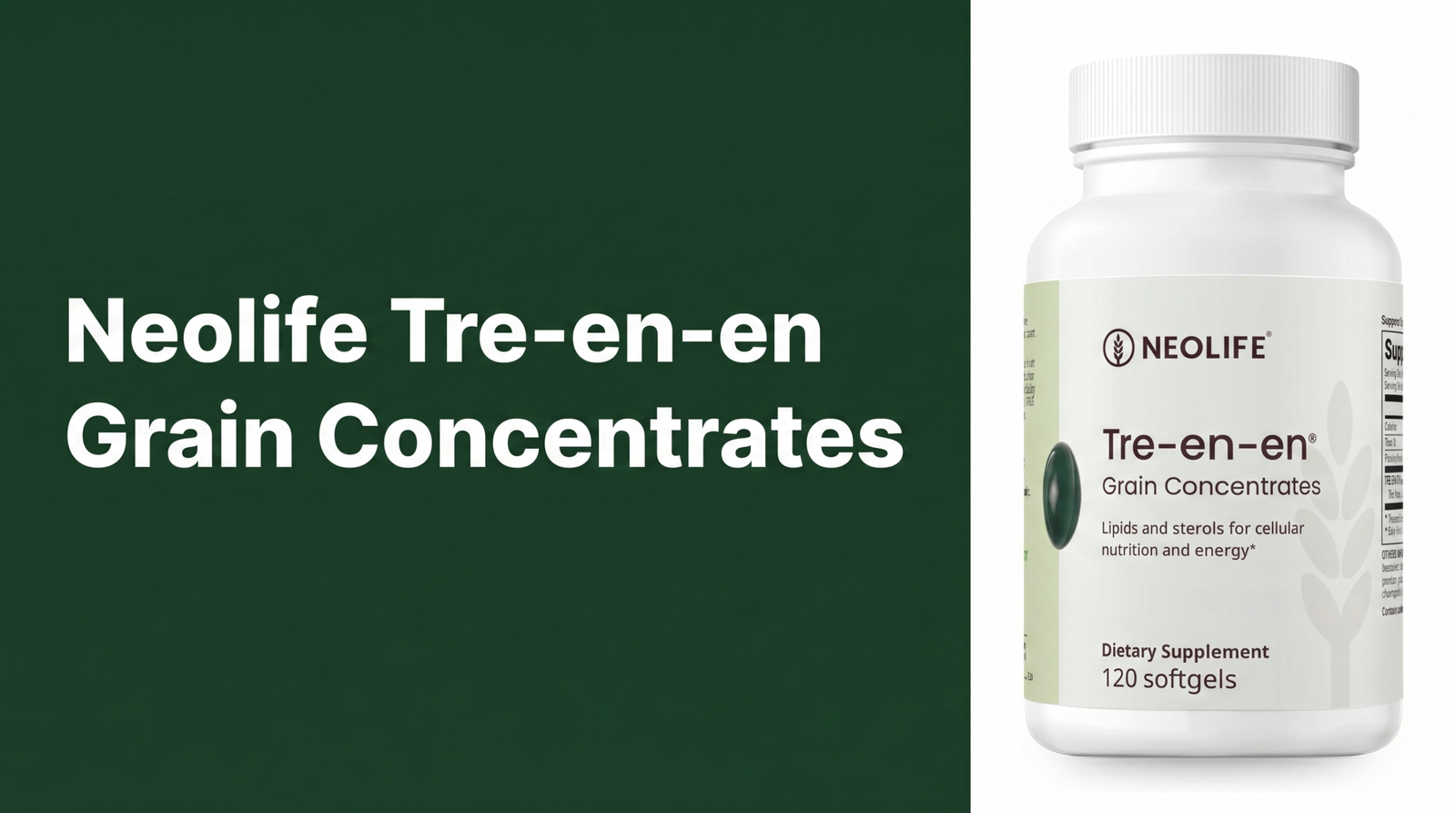
The Cell Membrane Science Behind the World’s First Phytonutrient Supplement
Editorial Note: This article examines the scientific rationale and research record behind NeoLife Tre-en-en Grain Concentrates. All cited studies are published in indexed scientific journals or conducted at accredited research institutions. No unverified health claims are made. Statements about cellular function and nutrient utilization have not been evaluated by the Food and Drug Administration. This product is not intended to diagnose, treat, cure, or prevent any disease.
The Problem Tre-en-en Was Designed to Solve
Modern grain processing removes more than fiber. The milling of wheat, rice, and corn into refined flour strips the grain of its outer bran layers and germ — the fractions richest in lipids, sterols, and fat-soluble phytonutrients. What remains is predominantly starch: calorically dense but nutritionally depleted relative to the whole grain.
By the mid-twentieth century, food scientists understood that refined grains lacked measurable quantities of the fatty acids and plant sterols present in whole grains. What was less understood was the functional consequence of that absence at the cellular level. NeoLife’s Scientific Advisory Board (SAB), drawing on emerging biochemistry, identified a specific mechanism: cell membrane composition.
Every cell in the human body is enclosed by a phospholipid bilayer — the cell membrane. This membrane is not a passive barrier. It is a dynamic structure that regulates what enters and exits the cell: nutrients, oxygen, hormones, signaling molecules. The physical properties of the membrane — its fluidity, permeability, and receptor activity — are determined in significant part by its lipid composition. When the diet is chronically deficient in the specific lipids and sterols that support membrane integrity, the membrane stiffens. A stiffened membrane is less permeable. A less permeable membrane is less efficient at absorbing nutrients and expelling cellular waste.
Tre-en-en was formulated to address this gap directly: to restore the grain lipids and sterols that modern food processing systematically removes.
1958: A Supplement Category That Did Not Yet Exist
When NeoLife introduced Tre-en-en in 1958, the term “phytonutrient” did not exist in mainstream nutrition science. The scientific community’s dominant framework for dietary supplements was built around vitamins and minerals — isolated micronutrients with established deficiency diseases and measurable reference intakes.
The category of plant-derived bioactive compounds — substances that are not essential in the classical deficiency sense but that exert functional effects on human physiology — was not formally recognized until decades later. The 1990s brought the term “phytonutrient” into scientific and public discourse, driven largely by epidemiological research linking plant-rich diets to measurable health outcomes.
NeoLife’s SAB anticipated this science by more than thirty years. The conceptual foundation of Tre-en-en — that whole-food plant compounds beyond vitamins and minerals play a functional role in human cellular biology — is now mainstream nutritional science. In 1958, it was not.
| Milestone | Institution / Context | Significance | Year |
|---|---|---|---|
| Tre-en-en introduced | NeoLife (GNLD) | World’s first phytonutrient supplement; grain lipid and sterol supplementation concept established | 1958 |
| SAB formally established | NeoLife Scientific Advisory Board | Dr. Arthur Furst (Stanford cancer research laboratory founder) among founding members; Purity, Potency, Proof standards adopted | 1976 |
| Texas A&M University research | Texas A&M University | Documented improved nutrient utilization efficiency and vitality in subjects supplementing with Tre-en-en grain concentrates | 1987 |
| Phytonutrient term enters mainstream science | Nutritional epidemiology / public health literature | Confirms the biological category Tre-en-en was built on — 35 years after product introduction | 1990s |
Cell Membrane Biology: Why Lipids and Sterols Matter
The scientific basis of Tre-en-en is inseparable from the biology of cell membranes. Understanding the product requires understanding what cell membranes do and how their composition affects their function.
The Phospholipid Bilayer
Cell membranes are composed primarily of phospholipids — molecules with a water-attracting head and two fat-soluble tails. These phospholipids arrange themselves into a double layer, with the fat-soluble tails facing inward and the water-attracting heads facing the aqueous environments on both sides of the membrane. This bilayer structure is fundamentally determined by the fatty acid composition of the phospholipids that make it up.
Membrane fluidity — the degree to which the phospholipid tails can move relative to one another — is a critical functional property. A membrane that is too rigid restricts the movement of membrane proteins, slows nutrient transport across the membrane wall, and reduces the efficiency of receptor-mediated signaling. A membrane that maintains appropriate fluidity supports the full range of transport, signaling, and enzymatic functions that cell membranes are responsible for.
Plant Sterols and Membrane Integrity
Sterols are a class of compounds that insert themselves into the phospholipid bilayer and modulate its physical properties. In animals, cholesterol performs this function — it acts as a membrane fluidity buffer, preventing excessive rigidity at low temperatures and excessive disorder at high temperatures. In plants, the equivalent compounds are phytosterols: beta-sitosterol, campesterol, stigmasterol, and related molecules.
Dietary phytosterols from whole grains integrate into cell membranes alongside cholesterol. Research on phytosterol biology has documented that these compounds influence membrane structure, affect the activity of membrane-bound enzymes, and modulate cellular uptake processes. When whole grain consumption is low and refined grain consumption is high, the dietary supply of these plant sterols is substantially reduced.
Grain Lipids: The Fat-Soluble Fraction
Whole grains contain a range of lipid compounds in addition to sterols — glycolipids, phospholipids, and free fatty acids concentrated in the bran and germ fractions. These compounds contribute to the lipid environment of cell membranes when consumed. The refining process that produces white flour removes the majority of these lipid fractions, retaining only the starchy endosperm.
Tre-en-en concentrates these grain lipids and sterols — specifically from wheat, rice, and soy — into a supplement form. The formulation is designed to restore what modern grain processing removes: not vitamins or minerals, but the fat-soluble bioactive fraction of whole grains that affects membrane composition.
The Texas A&M Research: What It Found
In 1987, researchers at Texas A&M University conducted studies examining the effects of Tre-en-en grain concentrate supplementation. The research documented improvements in nutrient utilization efficiency and vitality in supplementing subjects.
The significance of this finding lies in its mechanism. Nutrient utilization efficiency — the degree to which consumed nutrients are absorbed and used by cells — is a function of membrane permeability. If the Texas A&M findings reflect improved cellular uptake of nutrients, the underlying mechanism would be consistent with the cell membrane hypothesis that motivated Tre-en-en’s formulation: better membrane composition → better membrane function → more efficient nutrient transport into the cell.
This mechanistic coherence is scientifically relevant. When a proposed mechanism (grain lipids improve membrane fluidity) produces a predicted outcome (improved nutrient utilization), the alignment between hypothesis and result strengthens the evidentiary basis for the intervention.
The cell membrane controls what enters and exits every cell in the body. A membrane compromised by inadequate lipid composition is less permeable to nutrients — regardless of how much nutrition is consumed. Tre-en-en targets this upstream variable directly.
What Tre-en-en Actually Contains
Tre-en-en Grain Concentrates is derived from three whole grain sources: wheat, rice, and soy. Each source contributes a distinct profile of lipids and sterols to the formulation.
| Source Grain | Primary Lipid / Sterol Contribution | Fraction Used |
|---|---|---|
| Wheat | Wheat germ oil; octacosanol; glycolipids; phytosterols | Germ and bran lipid extract |
| Rice | Rice bran oil; oryzanol; phytosterols; tocotrienols | Bran lipid extract |
| Soy | Soy phospholipids; beta-sitosterol; lecithin | Soy lipid fraction |
This multi-grain approach is consistent with the whole-food philosophy that characterizes NeoLife’s SAB-guided formulations. Rather than isolating a single compound — a single sterol or a single fatty acid — Tre-en-en delivers the complex, synergistic lipid environment found in whole grains, as consumed in traditional diets before industrialized grain processing became standard.
Neolife Tre-en-en in the Context of NeoLife’s Foundational System
Tre-en-en does not exist in isolation within NeoLife’s product architecture. It is one of four components in the Pro Vitality+ foundational nutrition system, alongside Carotenoid Complex, Salmon Oil Plus, and an Essential Vitamin and Mineral Complex.
The SAB’s rationale for this grouping is mechanistically coherent. Cell membranes require multiple inputs to function optimally:
Tre-en-en provides the grain lipids and sterols that support baseline membrane structure. Carotenoid Complex delivers fat-soluble antioxidants that integrate into lipid structures — including cell membranes — where they protect against oxidative degradation. Salmon Oil Plus provides long-chain omega-3 fatty acids (EPA and DHA), which are major determinants of membrane fluidity in neuronal and immune cells. The micronutrient complex supports the enzymatic machinery that maintains membrane function.
This systems approach — addressing multiple cellular nutrition gaps simultaneously rather than treating each supplement as a standalone intervention — reflects the SAB’s stated design philosophy and distinguishes NeoLife’s foundational products from single-compound supplementation strategies.
The Processed Food Context: Why This Gap Is Relevant Now
The nutritional gap that Tre-en-en addresses has widened since 1958, not narrowed. Global refined grain consumption has increased substantially over the past seven decades. Wheat flour, white rice, and corn starch — all stripped of their lipid-rich bran and germ fractions — form the caloric base of most processed food products.
Simultaneously, the scientific literature on phytosterols has expanded considerably. Research published since the 1990s has documented that dietary phytosterols influence membrane composition, modulate immune cell function, and affect the activity of membrane-bound transport proteins. The biological mechanisms that motivated Tre-en-en’s 1958 formulation have since received extensive independent scientific attention.
The gap between whole-grain nutrition and refined-grain nutrition is not a rounding error. In populations consuming largely refined grain diets, the absence of grain lipids and sterols represents a systematic, daily nutritional shortfall — one that conventional multivitamin formulations do not address, because they are built around vitamins and minerals, not fat-soluble phytonutrients.
Practical Considerations
Fat-soluble delivery: Like carotenoids, grain lipids and sterols are fat-soluble. Tre-en-en is formulated as a softgel to ensure appropriate absorption. Taking it with a meal containing dietary fat further supports bioavailability.
Consistency matters: Cell membrane composition changes over time as existing phospholipids and sterols are replaced through normal cellular turnover. Consistent daily supplementation — not acute dosing — is the relevant variable for membrane-level effects.
Foundational, not symptomatic: Tre-en-en is not formulated to address a specific symptom or condition. It operates at the level of cell membrane composition — an upstream variable that influences how efficiently every cell in the body performs its functions. This positions it as a foundational supplement rather than a targeted therapeutic.
Synergy with the Pro Vitality+ system: The Pro Vitality+ system combines Tre-en-en with three complementary products addressing the same cellular nutrition framework. The SAB’s design intent is that these four products address distinct but interrelated cellular nutrition gaps — and that their combined effect is greater than any single component in isolation.
Frequently Asked Questions
What is Neolife Tre-en-en Grain Concentrates and why was it created?
Tre-en-en Grain Concentrates is a supplement providing the lipids and sterols found in whole grains — specifically the fat-soluble fraction removed when grains are refined into white flour or white rice. Introduced by NeoLife in 1958, it is the world’s first phytonutrient supplement. It was created to address the nutritional gap created by industrialized grain processing: the systematic removal of bran and germ fractions that contain grain lipids, phytosterols, and other fat-soluble bioactive compounds essential for cell membrane health.
How does Tre-en-en support cell membrane health?
Cell membranes are composed of a phospholipid bilayer whose physical properties — fluidity, permeability, receptor activity — are determined by their lipid and sterol composition. Grain lipids and phytosterols from whole grains integrate into this bilayer and help maintain appropriate membrane fluidity. When dietary intake of these compounds is low due to refined grain consumption, membranes may stiffen, reducing the efficiency of nutrient transport into the cell and waste removal out of it. Tre-en-en provides concentrated grain lipids and sterols from wheat, rice, and soy to restore this nutritional input at the cellular level.
What did the Texas A&M University research find about Tre-en-en?
Research conducted at Texas A&M University in 1987 documented improved nutrient utilization efficiency and vitality in subjects supplementing with Tre-en-en grain concentrates. The significance of this finding is mechanistic: nutrient utilization efficiency is in part a function of cell membrane permeability, which is influenced by the lipid and sterol composition of the membrane. A finding of improved nutrient utilization is consistent with the cell membrane hypothesis underlying the product’s formulation.
Why does Tre-en-en use three grain sources instead of one?
Wheat, rice, and soy each contribute a distinct lipid and sterol profile. Wheat provides wheat germ oil, octacosanol, and glycolipids. Rice bran contributes oryzanol, phytosterols, and tocotrienols. Soy provides phospholipids and beta-sitosterol. Using three sources delivers a broader spectrum of membrane-relevant compounds than any single grain could provide — consistent with the whole-food philosophy that guides NeoLife’s SAB-developed formulations. This multi-grain approach mirrors the nutritional diversity available in traditional whole-grain diets before modern food processing standardized refined grains.
How does Tre-en-en differ from a standard phytosterol supplement?
Standard phytosterol supplements are formulated primarily for LDL cholesterol reduction and typically deliver high doses of isolated beta-sitosterol or plant sterol esters. Tre-en-en is formulated for cell membrane nutrition — a different target — and delivers the complete fat-soluble fraction of whole grains, including glycolipids, phospholipids, and multiple phytosterol types alongside grain lipids. The two products address different biological targets through overlapping but distinct mechanisms. Tre-en-en was also introduced in 1958, predating the commercial phytosterol supplement category by several decades.
How does Tre-en-en relate to the Pro Vitality+ system?
Tre-en-en is one of four components in NeoLife’s Pro Vitality+ foundational nutrition system. The SAB designed Pro Vitality+ to address four cellular nutrition gaps simultaneously: grain lipid and sterol deficiency (Tre-en-en), carotenoid insufficiency (Carotenoid Complex), omega-3 deficiency (Salmon Oil Plus), and micronutrient shortfalls (Essential Vitamin and Mineral Complex). These four gaps are interrelated at the cellular level — all four influence cell membrane composition and function — which is why the SAB developed them as a system rather than standalone products.
The Science in Summary
Tre-en-en Grain Concentrates stands as a case study in nutritional science anticipating mainstream research. Introduced in 1958 before the term “phytonutrient” existed, it is built on cell membrane biology that has since been extensively validated in peer-reviewed literature. The Texas A&M University research documented real-world outcomes consistent with the product’s mechanistic hypothesis. As a component of the Pro Vitality+ foundational system, it addresses a nutritional gap — grain lipid and sterol deficiency — that conventional multivitamins do not.
For those evaluating Tre-en-en in the context of a foundational nutrition approach, full information is available via the NeoLife Scientific Advisory Board and through the Pro Vitality+ system overview.
Ready For Neolife? Join for FREE: Members Save 10–20% Sitewide | Promoters Save 25% ⚡
View Options
* These statements have not been evaluated by the Food and Drug Administration. This product is not intended to diagnose, treat, cure, or prevent any disease. Research citations are provided for informational purposes. Individual results may vary.